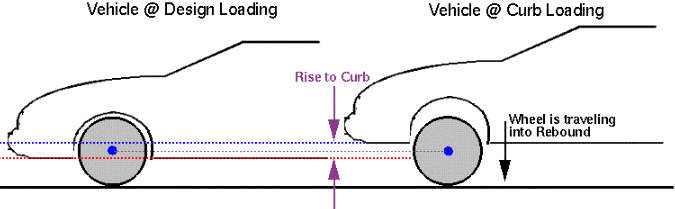
Rise-to-Curb
Springs are designed to support a vehicle at a certain ride height (design height) at a certain load (design load).
When the vehicle's payload is reduced (for example removing passengers and/or cargo), the sprung mass of the body is less than it is at design load, and the result is that the suspension "raises" the body.
The increase in suspension height between design load and the current (curb) load is defined as "rise-to-curb".
Rise-to-curb is 0 when curb loading is equal to design loading.