ACCM
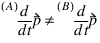
The ACCM function calculates the magnitude of the second time derivative of the displacement vector of marker i from marker j. The time derivatives are taken in the reference frame of marker l. Markers j and l default to the global coordinate system and the global reference frame if they are not specified.
Format
ACCM(i[,j][,l])
Arguments
i | The marker whose acceleration is being measured. |
j | The marker with respect to which the acceleration is being measured. Set j = 0, while still specifying l, if you want j to default to the global coordinate system. |
l | The reference frame in which the second time derivative of the displacement vector is taken. Set l = 0 or omit the argument if you want the time derivatives to be calculated in the ground coordinate system (GCS). |
Extended Definition
Mathematically, ACCM is calculated as follows:

where  is the displacement of marker i in ground and
  is the displacement of marker j in ground.
is the displacement of marker i in ground and is the displacement of marker j in ground.Note that for any vector quantity  :
:
:
Examples
REQUEST/10, F2=ACCM(21,11)
This statement defines the second component of a user-defined request as the magnitude of translational acceleration of Marker 21 with respect to Marker 11. Since the l marker is not specified, the derivatives are taken in the inertial reference frame.
REQUEST/10, F2=ACCM(21,11)
This statement defines the second component of a user-defined request as the magnitude of the translational acceleration of Marker 21 with respect to Marker 11. Vector time derivatives taken in reference to Marker 32. See other Acceleration available.