Using the transfer_fraction option
Parameter transfer_fraction is applicable only to Adams-EDEM co-simulation scenarios.
The transfer_fraction option is used to determine the transfer interval at which an EDEM process communicates with the Glue code to exchange force and displacement data. Conceptually, the transfer interval can be defined as follows:

where hE is the current EDEM time step and hA is the current Adams time step. Notice the transfer interval is computed as a fraction of the Adams time step but no less than EDEM's current time step. The computed transfer interval may be corrected depending on the difference tA-tE, where tA is the current Adams simulation time and tE is the EDEM current simulation time. The transfer interval may be adjusted to make sure EDEM does not simulate too much beyond the current Adams simulation time. The Glue code computes the transfer interval as an exact multiple of hE and drives the EDEM process accordingly.
The case of transfer_fraction = 0 is depicted in Figure 18 showing an Adams process that just took a time step hA using extrapolated forcing data F from an EDEM process. Figure 18 also shows that the EDEM process has a time step equal to hE and communicates to the Glue code at each EDEM time step (blue arrows). The figure shows the EDEM process is about to start its simulation.
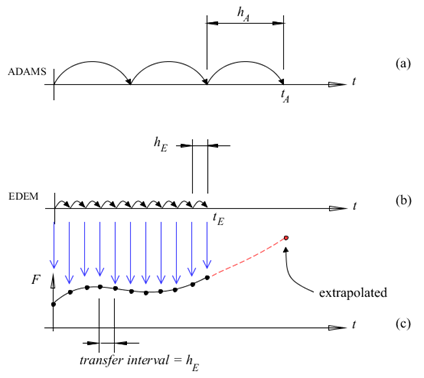
Figure 18 Case of transfer_fraction = 0.
Notice in this case the transfer interval is equal to EDEM's time step. However, for the case when EDEM is taking much smaller time steps than Adams (hE << hA) the transfer interval can be set as a fraction of the Adams time step in order to speed up the communication of EDEM with the Glue code.
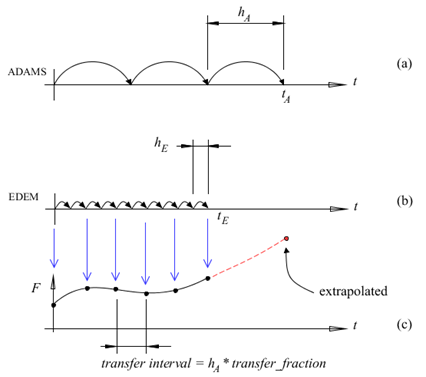
Figure 19 Case of non zero value for transfer_fraction.
Figure 19 shows an example of using a nonzero transfer_fraction option. Notice the value of the transfer_fraction is approximately equal to 0.5 because the transfer interval is approximately half the size of the Adams' time step. However, notice the transfer interval is not a constant because Adams may automatically change the size of its time step.
Figure 20 shows in pseudo code the computation of the transfer interval as an exact multiple of EDEM's time step.
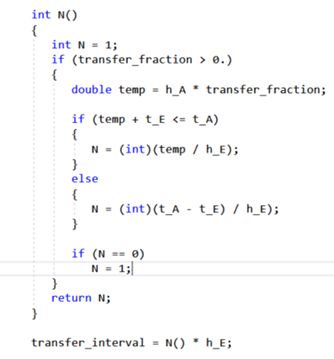
Figure 20 Pseudo code of transfer interval computation.