Gear AT Fast Preprocessing
The contact algorithm of Gear AT is efficient yet detailed so it is not feasible for simulation of large gear train assemblies over long simulation time. To overcome this limitation there is Gear AT Fast module which employs pre-computed gear contact thus providing high performance gear contact model at the expense of reduced accuracy of contact friction and damping. In addition to that, one cannot visualize contact pattern and is not possible to modify tooth micro geometry using pre-computed gear contact so it has to be settled before. The data of pre-computed gear contact are stored in a look up tables written in the *.hgf (Hypoid Gear Fast) file. The data are generated by conducting a large set of automatically controlled simulations driven by the built in testrig.
Complete the Gear AT Fast Preprocessing in following steps
Create Testrig for preprocessing
The preprocessing starts with building of gear pair testrig. This process is highly automated and offers the user to create the testrig either from existing model by selecting the Gear Force of existing gear pair or manually by selecting “from_hgp” and followed by entering the names of gear element input files *.hgp, *.hgs
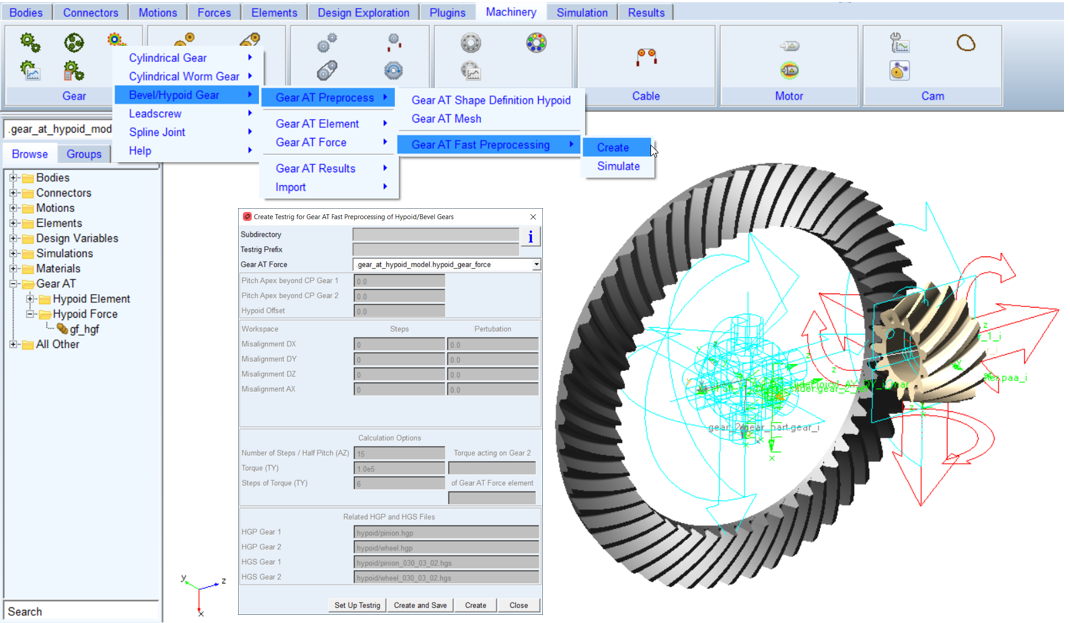
Figure 280 Create testrig for Bevel / Hypoid Gear AT Fast preprocesing
Prerequisite for creating the testrig is existence of bevel / hypoid gear property files, *.hgp and *.hgs files. If those files do not exist, you need to create them by following the guidelines in the section Gear AT Mesh. The dialog box for creating the testrig is invoked from Gear AT - Bevel/Hypoid Gear - Gear AT Preprocess - Gear AT Fast Preprocessing - Create menu as depicted on Figure 280.
After clicking on the Create or Create and Save button the testrig is created or created and saved, respectively, in Adams View command file in the directory specified in Subdirectory field if entered, otherwise into current working directory. The name of the testrig is Testrig Prefix_Gear AT Force_fast in case it was created from existing Gear AT Force element or Testrig Prefix_from_hgp_fast in case it was created from HGP files.
Once the testrig has been created, you can set it up and simulate to preprocess *.hgf file for Gear AT Fast simulations by either clicking the Set Up Testrig button or by navigating through Gear AT menu.
Set up and simulate testrig
The Simulate dialog box and meaning of all entries are depicted in Figure 232. The Simulate dialog box is invoked from Gear AT - Bevel/Hypoid Gear Gear - Gear AT Preprocess - Gear AT Fast Preprocessing - Simulate menu. You can also load previously created test rig by selecting the *.cmd file in the Import input field.
Before the preprocessor is launched, you have to define the workspace of a gear pair. For the sake of clarity, let us define following convention. Let us assume the gear with lower teeth number (pinion) is called Gear 1 - gear located in the origin of so called Contact Coordinate System (CCS) and the gear with higher number of teeth is called the Gear_2 (Figure 281). All results from Gear Fast preprocessing are reported in CCS reference frame.
There is a minimum required workspace definition to be applied under Calculation Options. Entry Number of Steps / Half Pitch defines number of rotational positions along Gear 1 pitch angle at which the contact is evaluated and it corresponds to the AZ rotation on the Figure 281. The number effectively corresponds to Number of Steps / Half Pitch * 2 + 1 steps, starting in position – half pitch angle and ending in + half pitch angle.
Entry Torque defines maximum torque applied on Gear_2 at every workspace position. The torque is applied in number of steps defined in entry Steps of Torque and corresponds to TX torque. If the preprocessor is executed while keeping all input entries of the Workspace group put to zero, it produces *.hgf file with no radial, axial displacements and no angular misalignment relative movement effects, what can be used for simple concept studies using rigid shafts on rigid supports (kinematic joints).
In order to support full relative motion of gears you have to fill the entries in group Workspace. Displacements are applied symmetrically, relative to the initial position of the Gear_2 in number of Steps, the value of displacement amplitude is entered in the Perturbation column. Misalignment DX corresponds to DX translation of Gear_2 and is applied normal to plane formed by rotational axes of both gears. Misalignment DY corresponds to translation of Gear_2 along its rotational axis. Misalignment DZ corresponds to translation of Gear_2 along rotational axis of the Gear_1 and Misalignment AX corresponds to rotation of Gear_2 around axis normal to plane formed by rotational axes of both gears. The entries in Steps fields effectively define Step * 2 + 1 total steps starting from – Perturbation and going to + Perturbation for every workspace dimension. Please note that entering non-zero perturbation with zero value of steps will deliver wrong results for gears relative movement.
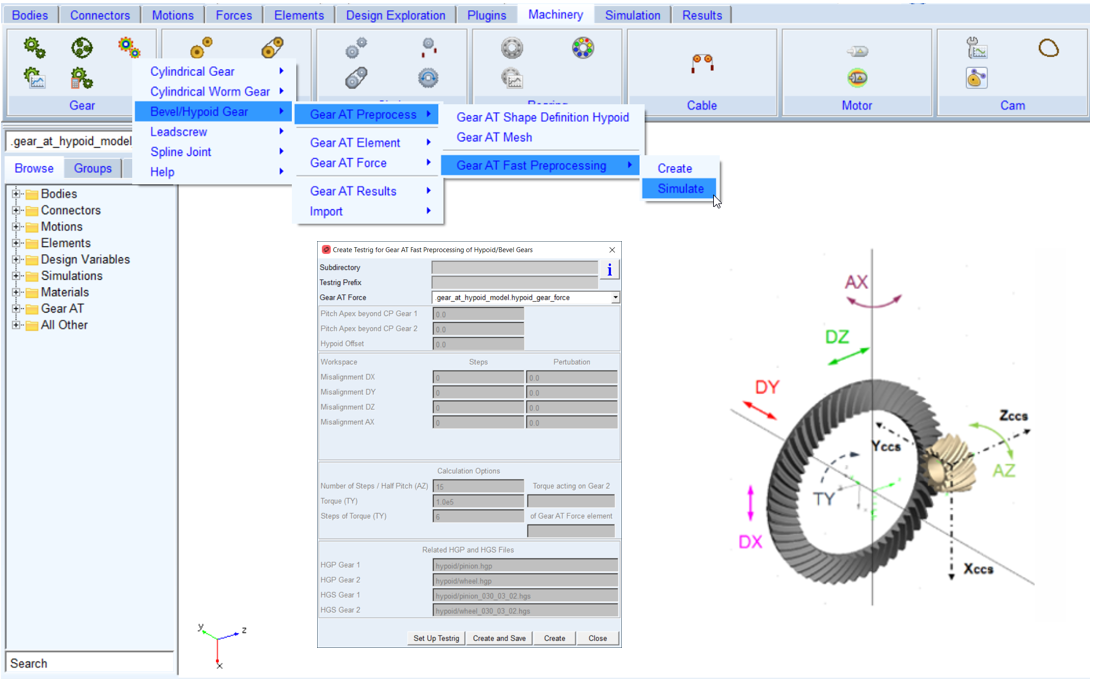
Figure 281 Bevel / Hypoid Fast testrig - definition of workspace dimensions
The toggle Show Messages activates/deactivates output of Adams/Solver messages into Adams/View information window. In case of higher number of total iterations it is recommended to not use the Show message option.
Click the Simulate button to automatically launch Gear AT Fast preprocessor. Calculated data are stored in a *.hgf file, in case it was created from existing Gear Force the name is:
Testrig Prefix_Gear AT Force_TORQUE_TY value.hgf
and in case it was created from *.hgp files:
Testrig Prefix_from_hgp_Gear_1_HGP_Gear_2_HGP.hgf
The preprocessor starts the calculations with so called “Free play study”. In this study the algorithm finds the difference between ideal kinematic position and start of the contact position for every defined workspace dimension combination.
The simulation progress is recorded in a *.log file, which has the same name as the *.hgf file. The *.log file summarizes the estimation of required iteration number to be performed and adequate time estimation for the preprocessing, see Figure 282. Next sections of log file content depict progress and results of free play study and also show current iteration step and details about contact computation at given workspace position.
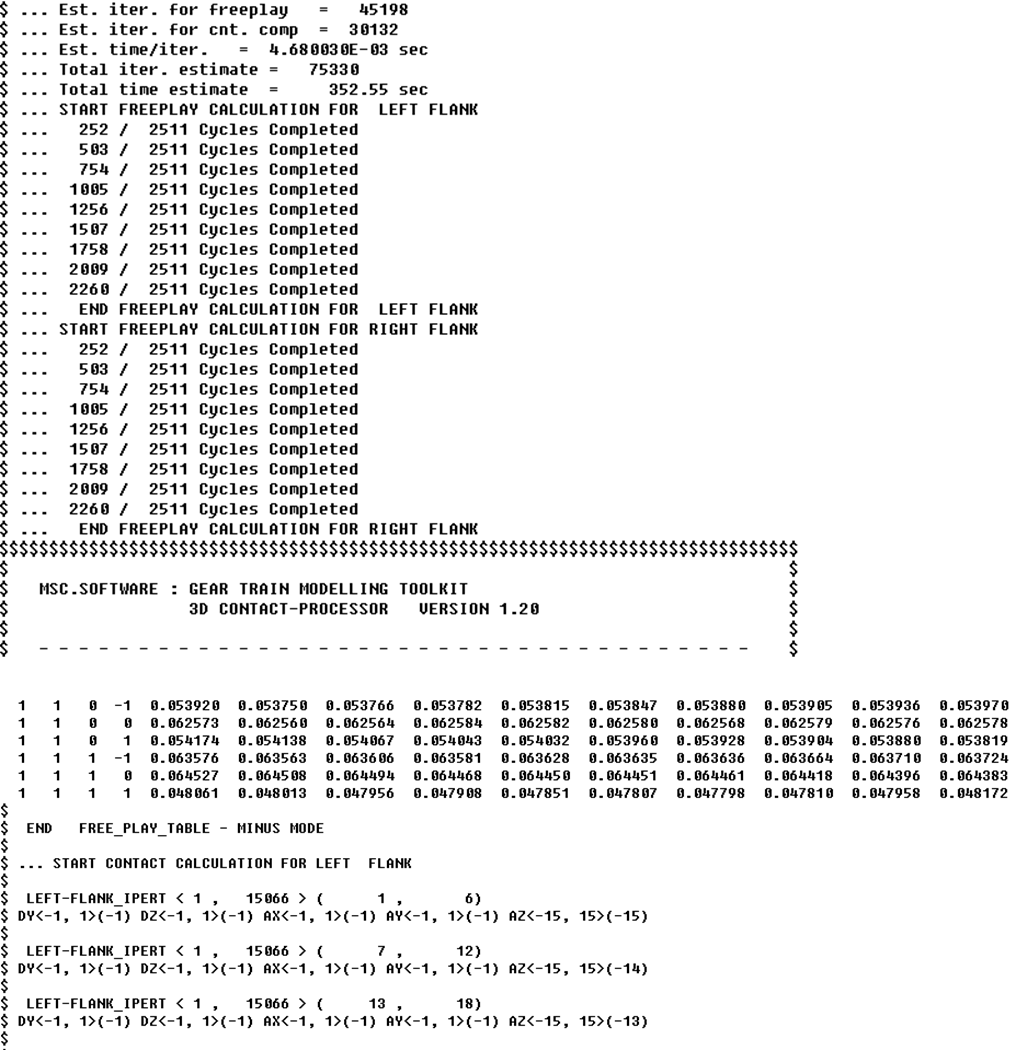
Figure 282 Bevel / Hypoid Fast preprocessing - log file content
Modify Gear AT Force
After the preprocessing is completed, the *.hgf file is stored in current working directory. To use it for Gear AT Fast simulation, you have to switch back to your original bevel / hypoid gear model, modify particular Gear AT Force and switch current Modeling Option to Gear AT Fast and browse for *.hgf file you just created (Figure 283).
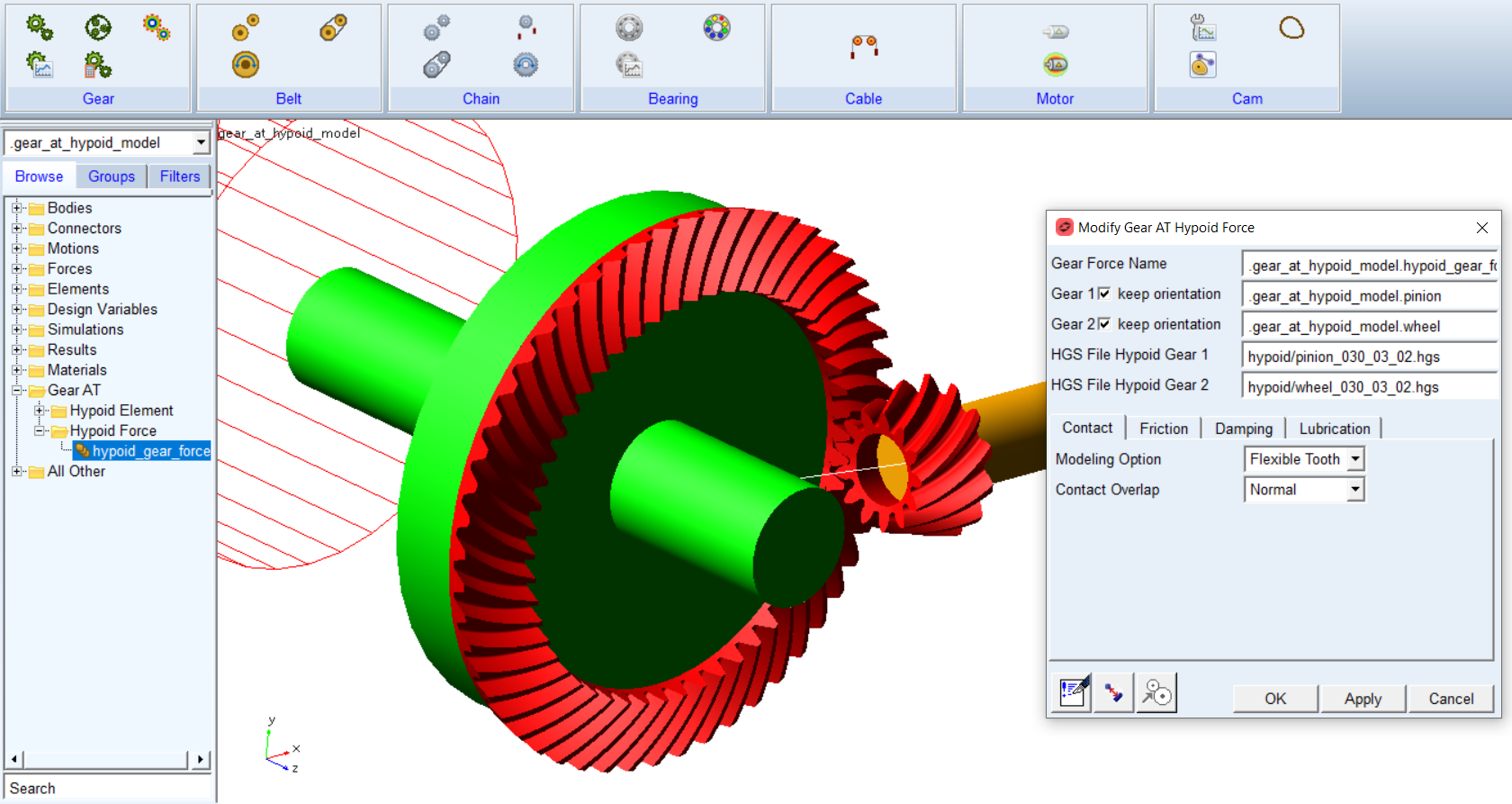
Figure 283 Modify Gear AT force - Bevel / Hypoid Fast